Riyadh offices are close to full, and rents are frozen
Regional headquarters keep arriving in Riyadh, prime office space is close to full and rents are frozen for five years. What the public data shows.
More than 700 international companies now run a regional headquarters from Saudi Arabia, and most of them want space in Riyadh's best buildings. KAFD, the flagship business district, is about two-thirds leased. Listed landlords report their Riyadh towers at or near full. And since September 2025, Riyadh rents have been frozen for five years.
| Metric | Value | Scope | As of | Source |
|---|---|---|---|---|
| Regional HQs in the Kingdom | 700+ (2030 target of 500 already beaten) | Demand driver | end 2025 | RCRC |
| KAFD office space leased | 580,000 sqm of 900,000+ (~64%) | Prime district | Aug 2025 | KAFD |
| Listed-REIT office occupancy | ~96-100% (Omran proxy) | Institutional/prime | 2023 to Dec 2025 | REIT disclosures |
| Secondary-office counter-example | 74% occupancy | One Jeddah multi-tenant office | Dec 2024 | SEDCO Capital REIT |
| Commercial real-estate prices | +7.0% YoY (vs +1.5% residential) | Kingdom-wide | through Q3 FY2025 | MoF / GASTAT |
| Riyadh rent freeze | 5-year cap, residential + commercial | Riyadh urban boundary | from 25 Sep 2025 | REGA |
| New Murabba office pipeline | 1.4 million sqm | Future supply, delivery 2030 | announced 2023 | PIF |
Why demand keeps outrunning supply
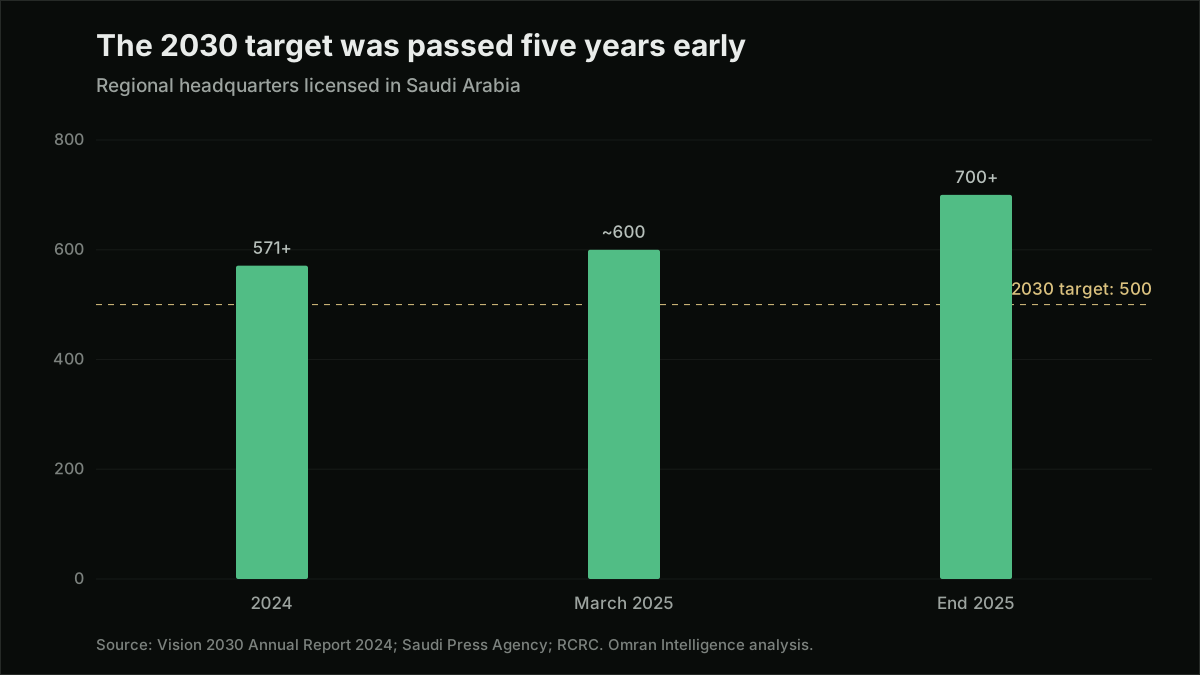
Most of the pressure comes from one policy. Under the Regional Headquarters (RHQ) programme, a multinational that wants government contracts has to base its regional HQ in the Kingdom, and in practice that means Riyadh. The Royal Commission for Riyadh City says the programme passed 700 companies by the end of 2025, well beyond its 2030 target of 500 (RCRC). The chart shows how quickly the count rose (2024 figure from the Vision 2030 2024 Annual Report, March 2025 from the Saudi Press Agency; the MISA Q2 2025 monitor counted 34 new licences in that quarter).
KAFD is where this shows first. More than 580,000 sqm of its 900,000+ sqm of offices is leased, to over 100 companies including PIF, Aramco, Goldman Sachs, PepsiCo and Bain (KAFD, Aug 2025; totals from the KAFD official site).
The economy behind it is growing too. The IMF puts private-sector job growth at 12% on average in 2024 (IMF Article IV 2025), and unemployment in the Riyadh region was 2.0% in Q1 2026 (GASTAT / DataSaudi).
How full is the market?
No government body publishes an office vacancy rate for Riyadh. Listed REITs do report occupancy in their audited accounts, building by building, and that is the best public guide we have.
| Fund or building | Occupancy | As of |
|---|---|---|
| Riyad REIT, whole portfolio | 98% | Dec 2025 |
| Riyad REIT, Olaya Tower and Al-Raed Building (Riyadh) | 100% | Dec 2025 |
| Bonyan REIT, two Riyadh office towers | 100% | 2023 |
| Al Maather REIT, whole portfolio | 99.2% | Q2 2024 |
| SEDCO Capital REIT, whole portfolio | 97.2% | Dec 2024 |
| Al Rajhi REIT, Riyadh multi-tenant office | 96.04% | 2023 |
| Derayah REIT, whole portfolio | 96% | Dec 2023 |
| SEDCO, Al Khalidiya Business Center (Jeddah, multi-tenant) | 74% | Dec 2024 |
Sources: Riyad REIT, Bonyan, Al Maather via Argaam, SEDCO, Al Rajhi REIT, Derayah.
These are prime, professionally managed buildings, and several have a single government tenant on a long lease, so they flatter the wider market. The bottom row is the reminder: older multi-tenant space has real vacancy. "Prime", "Grade A" and "Grade B" also mean different things, and only brokers publish the split (see what "Grade A office" means in the Gulf).
What is happening to rents
Commercial property prices were rising faster than homes before the freeze. The official index shows them up 7.0% year-on-year through Q3 of FY2025, against 1.5% for residential (Ministry of Finance, on GASTAT data). The central bank links part of that rise to the RHQ programme (SAMA Financial Stability Report 2025).
Growth has since slowed. In Q1 2026 commercial prices were up 3.4%, still the only major segment rising (GASTAT, Q1 2026). The index measures capital values, which makes it a guide to direction rather than to rent levels.
Then came the policy. On 25 September 2025, Riyadh froze rent increases for five years on residential and commercial leases, new and existing, inside the city's urban boundary (REGA). For a landlord in a full building, that removes the usual reward for tight supply: income now grows only through new space, not through reviews on existing leases.
As a rough check on levels, dividing REIT rent by leasable area gives about SAR 300-730 per sqm per year across disclosed commercial assets (Mulkia REIT; SEDCO). That band mixes cities and grades, so treat it as a range only.
What is coming
New supply will not ease things soon. The biggest confirmed project is New Murabba, with 1.4 million sqm of offices due around 2030 (PIF). KAFD's 95 buildings are largely built (PIF). Banks keep lending: real-estate loans reached SAR 970.9 billion by Q1 2026 (SAMA, Q1 2026; see also SAMA via Arab News).
Nobody publishes how much space is actually added each year once delays and demolitions are counted (see pipeline vs net supply), nor how much is taken up each quarter (absorption rate). Those, along with a city-wide vacancy rate and a surveyed prime rent, sit only in private broker reports.
We track the Gulf office market from REIT reports, government indices and developer filings, with a date and source on each figure. Request the underlying dataset or book a 30-minute data briefing.
FAQ
How tight is the Riyadh office market? Very, at the top end. Listed landlords report Riyadh offices at or near full, and KAFD is about two-thirds leased. Older multi-tenant buildings are weaker.
What is driving demand? Mainly the Regional Headquarters programme, which passed 700 companies by end-2025.
Are Riyadh office rents still rising? Commercial prices were still growing in Q1 2026, but more slowly, and Riyadh rents are frozen for five years from 25 September 2025.
How much office space is Riyadh adding? New Murabba is the largest confirmed project, due around 2030. Net annual additions are not published.
What does public data not reveal? City-wide vacancy, prime rent per sqm, total stock and absorption. Only private broker surveys carry them.
Sources
- Royal Commission for Riyadh City (RCRC), RHQ programme (700+ by end-2025): link
- Saudi Press Agency, ~600 RHQs by March 2025: link
- Vision 2030 2024 Annual Report (571+ RHQs), via Arab News: link
- MISA Economic & Investment Monitor Q2 2025 (34 RHQ licences), via Arab News: link
- KAFD, 580,000 sqm leased (via Argaam): link
- KAFD official site (900,000 sqm office, 1.6M sqm land): link
- Public Investment Fund, KAFD (95 buildings): link
- Public Investment Fund, New Murabba (1.4M sqm office): link
- Riyad REIT Fund, Annual Report 2025 (98% occupancy, WAULT, NLA): link
- SEDCO Capital REIT, Annual Report 2024 (97.2%; Al Khalidiya 74%): link
- Al Maather REIT (99.2%), via Argaam: link
- Derayah REIT, Annual Report 2023 (96%): link
- Bonyan REIT, Annual Report 2023 (Riyadh office towers 100%): link
- Al Rajhi REIT, Annual Report 2023 (Riyadh office 96.04%): link
- Mulkia Gulf Real Estate REIT, Annual Report 2024 (implied rents): link
- Ministry of Finance, Budget Statement FY2026 (commercial RPI +7.0%): link
- GASTAT, Real Estate Price Index Q1 2026: link
- SAMA, Financial Stability Report 2025 (commercial +25.7% since 2021): link
- SAMA, Key Economic Developments Q1 2026 (RE loans SAR 970.9bn): link
- REGA, Riyadh five-year rent freeze (25 Sep 2025): link
- IMF, Article IV Saudi Arabia 2025 (employment, non-oil GDP): link
- GASTAT / DataSaudi, Riyadh region (population, labour): link